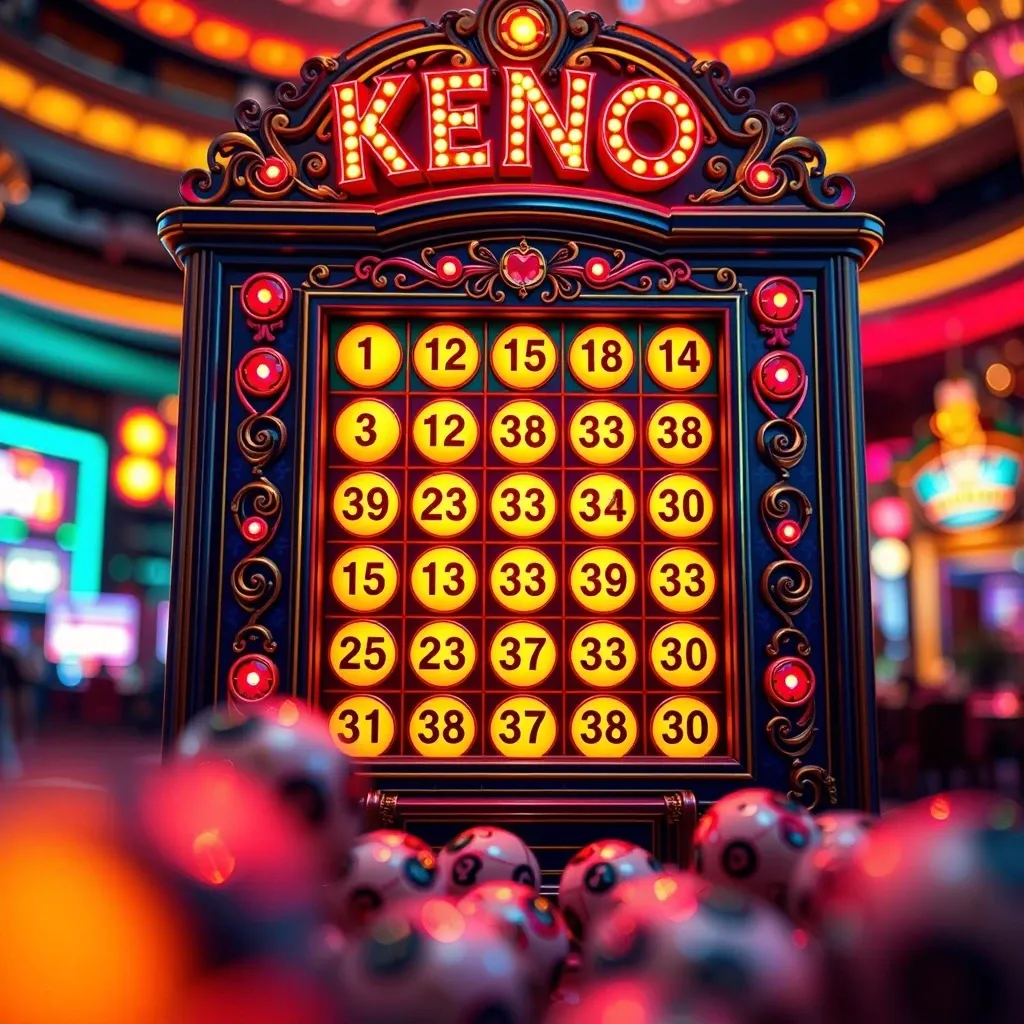
Keno. The very name conjures images of flashing lights, bouncing balls, and the tantalizing possibility of instant fortune. As someone who’s spent countless evenings immersed in the world of Keno, I can tell you it’s more than just a game; it’s an experience. It’s a blend of anticipation, excitement, and, let’s be honest, a little bit of nail-biting suspense. I remember my first time playing Keno. The numbers seemed to blur, the anticipation was intoxicating, and though I didn’t hit the jackpot, I was hooked.
But here’s the thing about Keno: it’s a game of chance, pure and simple. There’s no magic formula for guaranteed wins, despite what some may claim. Forget the “winning keno” myths, but with this guide, it’s about more than just blindly picking numbers. It is about understanding the odds, making informed decisions, and, most importantly, maximizing the fun. This isn’t about turning you into a Keno millionaire overnight. It’s about equipping you with the knowledge and strategies to play smarter, manage your expectations, and enjoy the thrill of the game to the fullest.
Over the years, I’ve delved deep into the mechanics of Keno, exploring various strategies and analyzing the numbers. Now, I’m here to share my insights with you. We’ll explore everything from the basics of how to play Keno to some simple strategies and tips for getting the most out of your Keno experience. So, buckle up, and let’s dive into the world of Keno together!
Keno Basics: Understanding the Game’s Fundamentals
Keno, a game of chance similar to a lottery, offers a simple yet engaging experience. The core principle revolves around selecting numbers and hoping they match those drawn randomly. Understanding the fundamental rules is key to enjoying the game and potentially increasing your chances of winning.
Here’s a breakdown of how Keno works:
- Number Selection: Players choose numbers from a grid, typically ranging from 1 to 80. The number of picks can vary, but casinos usually allow selecting between 1 and 20 numbers.
- Ticket Purchase: After selecting the desired numbers, players need to purchase a Keno ticket with their choices. The ticket will display the picked numbers.
- The Keno Drawing: Once all ticket sales are closed for a particular game, the casino randomly draws 20 numbers from the same 1-80 grid. This draw can be live or computer-generated and is usually prominently displayed for all players to see.
- Payout Determination: The payout depends on several factors, including how many numbers a player chose, how many of those numbers matched the drawn numbers, and the casino’s specific payout structure. Payout tables clearly outline the winnings for various match combinations.
Winning at Keno is purely based on chance, as each number has an equal probability of being drawn. While there is no guaranteed method to win, comprehending the rules and payout system allows one to play efficiently and enjoyably.
Keno Tickets and Number Selection Explained
Navigating the world of Keno tickets can initially seem overwhelming, but grasping the different types simplifies the process. Here are some common Keno ticket types:
- Straight Ticket: This is the most basic type, where players select a set of numbers and wager on those numbers being drawn.
- Way Ticket: Way tickets allows players to create multiple sets of numbers on a single ticket. For example, a player might circle two groups of four numbers and one group of two numbers. Each group is then wagered on separately.
- Combination Ticket: This type combines features of both straight and way tickets. Players can group numbers in various combinations and wager on them individually or in combination. For instance, if a player selects the numbers 1, 2, 3, and 4, they might wager on individual numbers, pairs (1&2, 3&4), or all four together.
The number selection process is straightforward: players mark their chosen numbers on the Keno grid using a pen or marker. Typically, casinos offer different colored pens, so the personnel can clear see the selection. After the ticket is submitted and payment is processed, the player gets a duplicate as a receipt while the original is processed into the system.
Decoding the Keno Card and Paytable
Keno, at its heart, is a simple game of chance, but understanding the Keno card and paytable is vital to maximizing your enjoyment and potential winnings. The Keno card typically features a grid of numbers, usually from 1 to 80. Players select a set of numbers, known as “spots,” by marking them on the card. The number of spots you can choose varies depending on the specific Keno game but usually ranges from 1 to 10 or 1 to 20.
Once you’ve selected your spots, the game begins. In a physical Keno game, numbered balls are drawn randomly. In online Keno, a random number generator (RNG) selects the numbers. The goal is to match as many of your chosen spots as possible with the drawn numbers.
The Keno paytable is where you’ll find information about the payouts. It shows how much you win for matching a specific number of spots, based on how many spots you initially selected. Here’s a simplified example:
| Spots Selected | Spots Matched | Payout |
|---|---|---|
| 5 | 3 | 2x your bet |
| 5 | 4 | 20x your bet |
| 5 | 5 | 500x your bet |
| 10 | 5 | 1x your bet |
| 10 | 7 | 15x your bet |
| 10 | 10 | 10000x your bet |
As you can see, the more spots you match, the higher the payout. However, the odds of matching all your spots decrease as the number of spots selected increases. Paytables vary significantly between different Keno games, so always take the time to examine the paytable before playing.
Understanding Spot Selection and Payout Variations
The number of spots you choose to play significantly impacts your potential payout variations. Some players prefer to select only a few spots, hoping to hit them all for a smaller but more likely win. Others opt for a larger number of spots, chasing the bigger payouts that come with matching more numbers.
Different casinos and online platforms will offer different payout structures. Some may offer higher payouts for matching a few spots when playing a small number of spots, while others might be more generous with payouts when playing more spots. Here’s an illustration of how payouts can vary.
| Spots Selected | Spots Matched | Payout Variation 1 | Payout Variation 2 |
|---|---|---|---|
| 3 | 2 | 1x your bet | 2x your bet |
| 7 | 4 | 0.5x your bet | 1x your bet |
| 10 | 6 | 2x your bet | 3x your bet |
Return to Player (RTP) is a key concept to understand. RTP reflects the percentage of wagered money that a Keno game is expected to pay back to players over a long period. Games with a higher RTP theoretically offer better long-term value. Keno typically has a lower RTP than other casino games, so carefully compare different games and paytables to find those with the most favorable RTP.

Probability and Odds: Demystifying Keno’s Math (Without Getting Too Mathematical)
Keno, at its heart, is a game of chance. While it might seem daunting, understanding the basic probabilities and odds can make playing more fun. Forget complex formulas; think of it like this: imagine reaching into a bag full of numbered balls. Keno is essentially predicting which numbers will be drawn. The more numbers you choose (your “spots”), the lower the odds of hitting them all, but the potential payout increases. Conversely, choosing fewer spots increases your chances of hitting, but the payout is smaller.
While the exact probabilities can be tricky, here’s a simplified look at the approximate odds of hitting a certain number of spots:
| Number of Spots Chosen | Approximate Odds of Hitting All Spots |
|---|---|
| 1 | 1 in 4 |
| 4 | 1 in 15 |
| 7 | 1 in 40 |
| 10 | 1 in 90 |
Remember, these are just approximations. Keno is unpredictable, adding to its excitement.
The House Edge in Keno: What You Need to Know
Every casino game has a “house edge,” which represents the casino’s average profit from the game. It’s the built-in advantage that ensures the casino makes money in the long run. Keno typically has a higher house edge compared to other casino games like blackjack or poker. This means that, on average, the casino keeps a larger percentage of each wager in Keno. The return to player (RTP) rate in Keno is typically under the average one, varying between 70% and 95%, making it one of the games with the highest house edge.
While this might sound discouraging, it’s important to remember that Keno is primarily for entertainment. The high house edge simply means you shouldn’t expect to win consistently. Think of it as paying for the thrill of the game!
Strategies for Playing Keno: Maximizing Your Chances (Within Reason)
Keno, a game of chance and anticipation, doesn’t offer guaranteed wins through strategies. However, employing smart tactics can significantly extend your playtime and potentially enhance your overall enjoyment. A cornerstone of responsible Keno playing lies in meticulous bankroll management. Before diving in, determine a specific budget you’re comfortable spending and strictly adhere to it. Avoid chasing losses; if your budget is depleted, refrain from further play. One effective technique involves dividing your total bankroll into smaller units, representing individual game stakes. This approach helps regulate your spending and prevents rapid depletion of funds. Furthermore, the importance of selecting reputable Keno games with transparent payout structures cannot be overstated. Different games offer varying odds, so researching and choosing those with fairer returns can improve your prospects.
Number Selection Tactics: Hot Numbers, Cold Numbers, and Random Picks
When it comes to choosing Keno numbers, various schools of thought exist. Some players subscribe to the “hot numbers” strategy, believing that numbers frequently drawn in the recent past are more likely to appear again. They meticulously track previous results, selecting numbers based on their observed frequency. Conversely, others favor the “cold numbers” approach, wagering that numbers that haven’t appeared recently are due for a draw. This strategy hinges on the idea that randomness will eventually balance out the frequency of all numbers. Finally, many players opt for a completely random selection, letting fate and chance dictate their picks. This can involve using a random number generator or simply choosing numbers spontaneously. Ultimately, the choice of number selection strategy is a matter of personal preference, as no definitive method guarantees success in this game of chance.
Common Keno Myths and Misconceptions
Keno, a game of chance and anticipation, is unfortunately fertile ground for superstitions and misconceptions. Many players fall prey to beliefs that simply don’t hold up under the cold light of probability. Let’s debunk some of the most pervasive Keno myths.
The “Hot” and “Cold” Number Fallacy: Perhaps the most widespread Keno myth is the idea that certain numbers are “hot” (drawn frequently) or “cold” (rarely drawn). The belief is that hot numbers are likely to keep appearing, while cold numbers are “due” to hit. However, each Keno draw is an independent event. The game doesn’t remember the previous results. Every number has an equal chance of being selected in each round, regardless of its past performance. Believing in hot and cold numbers is a classic example of the gambler’s fallacy.
Keno Superstitions: Like many games of chance, Keno attracts a host of superstitions. Some players believe that wearing a lucky item, sitting in a particular seat, or using a specific pen will influence the outcome. These rituals might be fun and add a personal touch to the game, but they have absolutely no impact on the random number generator that determines the winning numbers.
I used to think certain seats were lucky. During one Keno session, I was convinced the seat near the entrance was a winner. So, I stubbornly waited for it to become available, even as other potentially lucky seats opened up. It was ridiculous. Of course, I lost that round, a funny lesson in the futility of Keno superstitions. The numbers you pick are all that matter.

Keno Variations: Exploring Different Game Types
Keno isn’t a static game; it evolves with exciting variations that add unique twists to the classic gameplay. Understanding these keno variations can inject fresh excitement into the game.
Variations like Power Keno amplify winnings by multiplying payouts if the last number drawn completes a winning combination. This can lead to exhilarating wins, but it’s essential to adjust your strategy accordingly.
Bonus Keno offers a different edge, introducing bonus rounds or symbols that trigger even larger payouts. This variation can be particularly appealing to players seeking higher risk, higher reward scenarios.
Exploring different online keno variations allows players to discover the types of games that best suit their preferences and risk tolerance. It is important to know the specific rules of each variation before playing.
Responsible Gaming: Playing Keno Safely and Sensibly
Keno, like any form of gambling, should be approached with caution and a strong sense of responsibility. While it can be an entertaining pastime, it’s crucial to understand the potential risks and adopt strategies for safe keno play. Responsible gaming in Keno involves setting personal limits on spending and time, understanding the odds, and recognizing the signs of potential gambling addiction. Adhering to these practices ensures that Keno remains a source of enjoyment, not a source of financial or emotional distress. Remember, the goal is entertainment, and never to chase losses or gamble with money you cannot afford to lose.
Conclusion
Keno is a game of chance, but employing smart strategies and understanding the odds can significantly enhance your enjoyment and potentially improve your outcomes. Remember that no strategy guarantees a win, and the house always has an edge. The beauty of Keno lies in its simplicity and the thrill of the draw.
To recap, focus on selecting a consistent set of numbers, managing your bankroll wisely, and exploring different Keno variants to find one that aligns with your preferences. Most importantly, approach Keno as a form of entertainment and never wager more than you can afford to lose.
Responsible gaming is paramount. If you ever feel that gambling is becoming a problem, seek help. There are resources available to support you.
Now that you’re equipped with these keno strategies and tips, go out there and enjoy the game! Do you have any personal Keno experiences or questions? Feel free to share them!